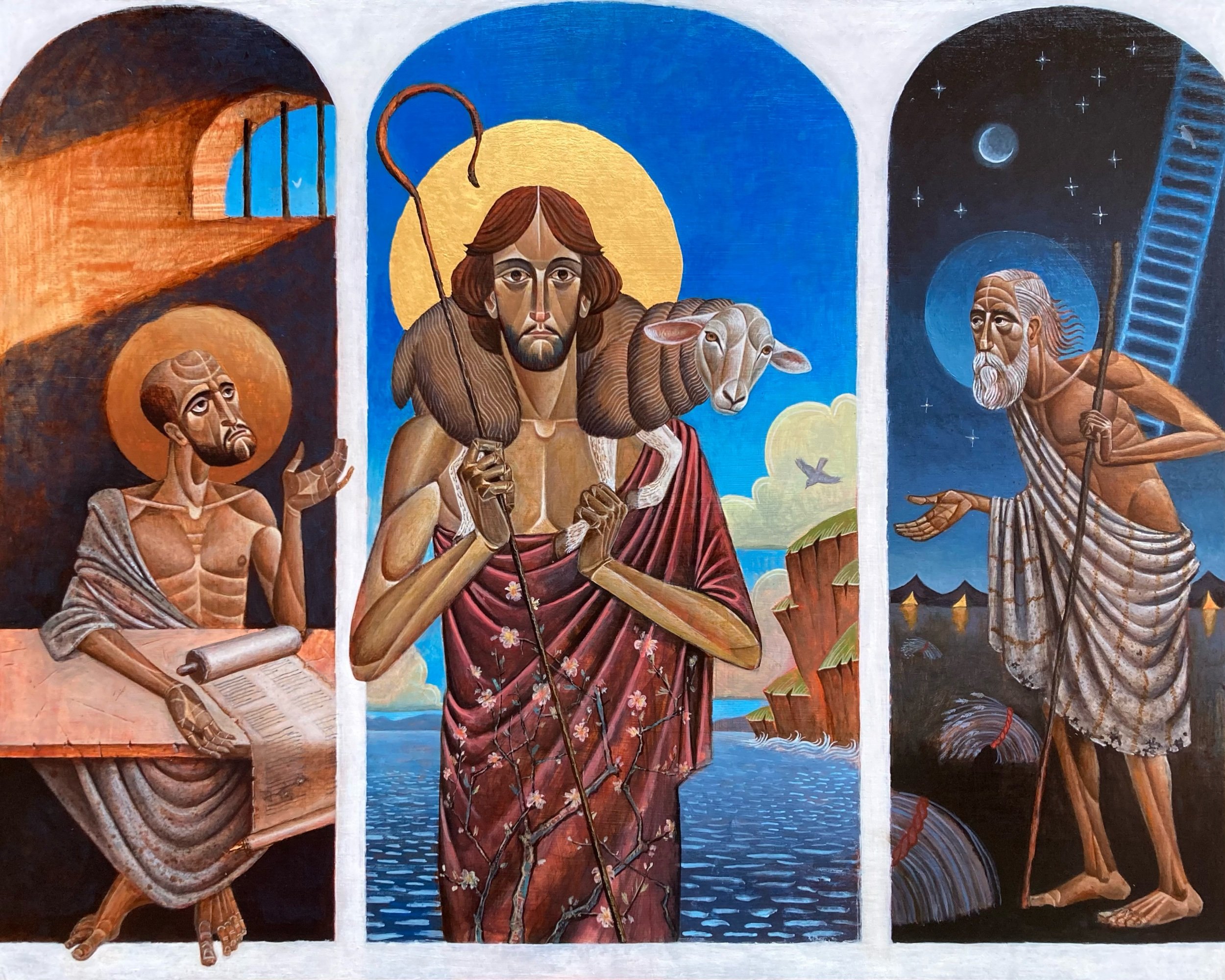
48 x 72, Acrylic on panel
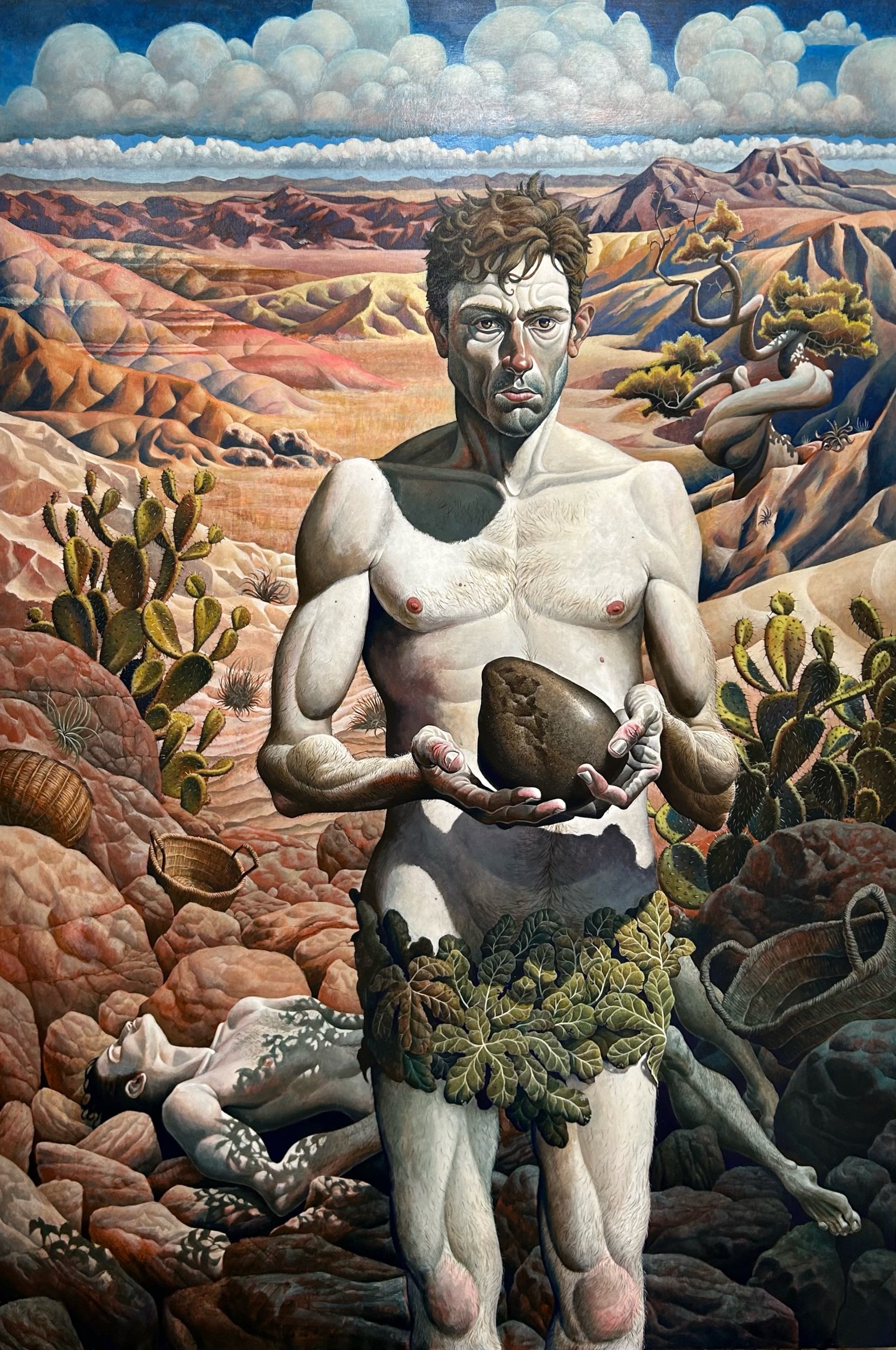
24x48, acrylic on wood panel

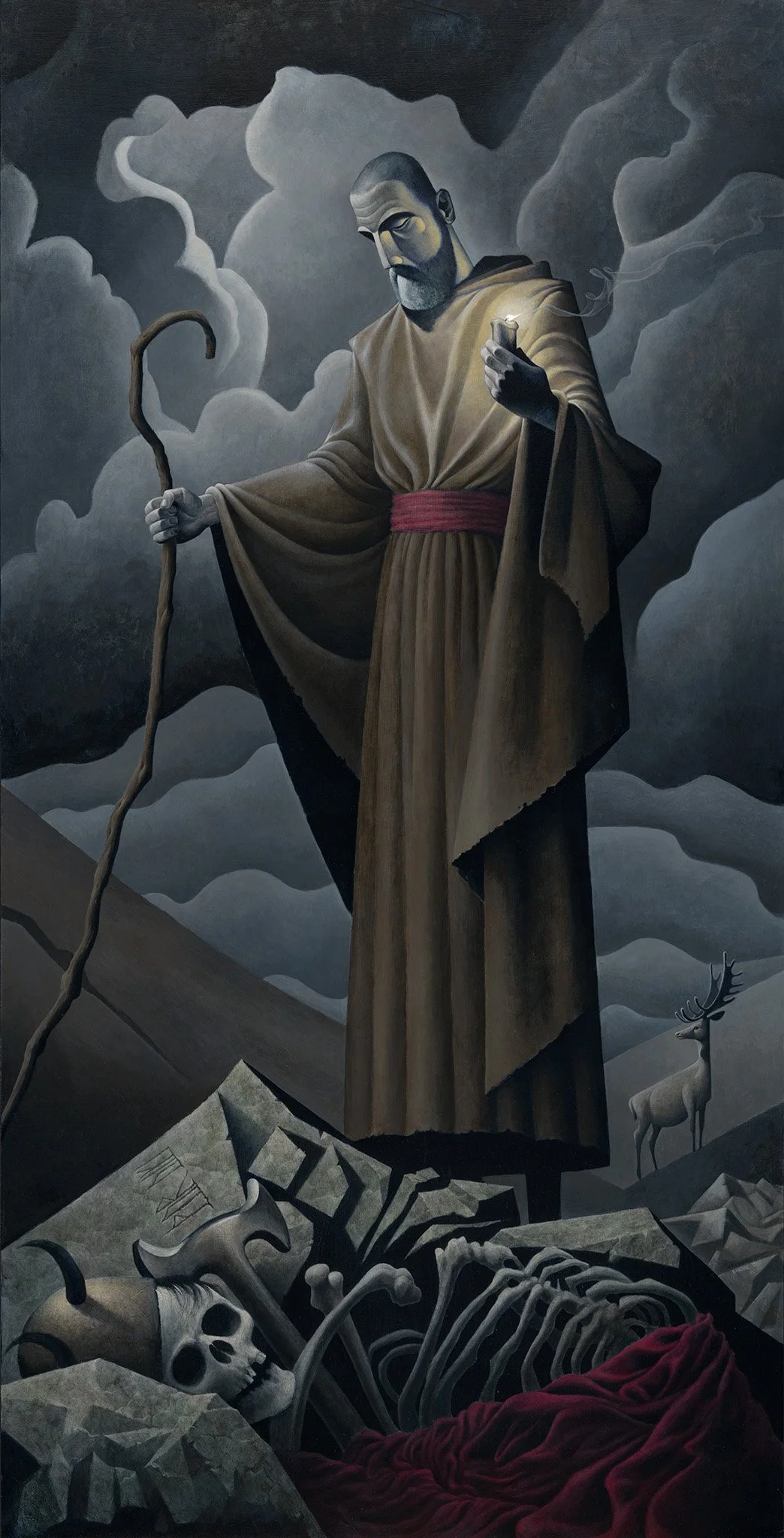
30 x 40, Oil on Canvas
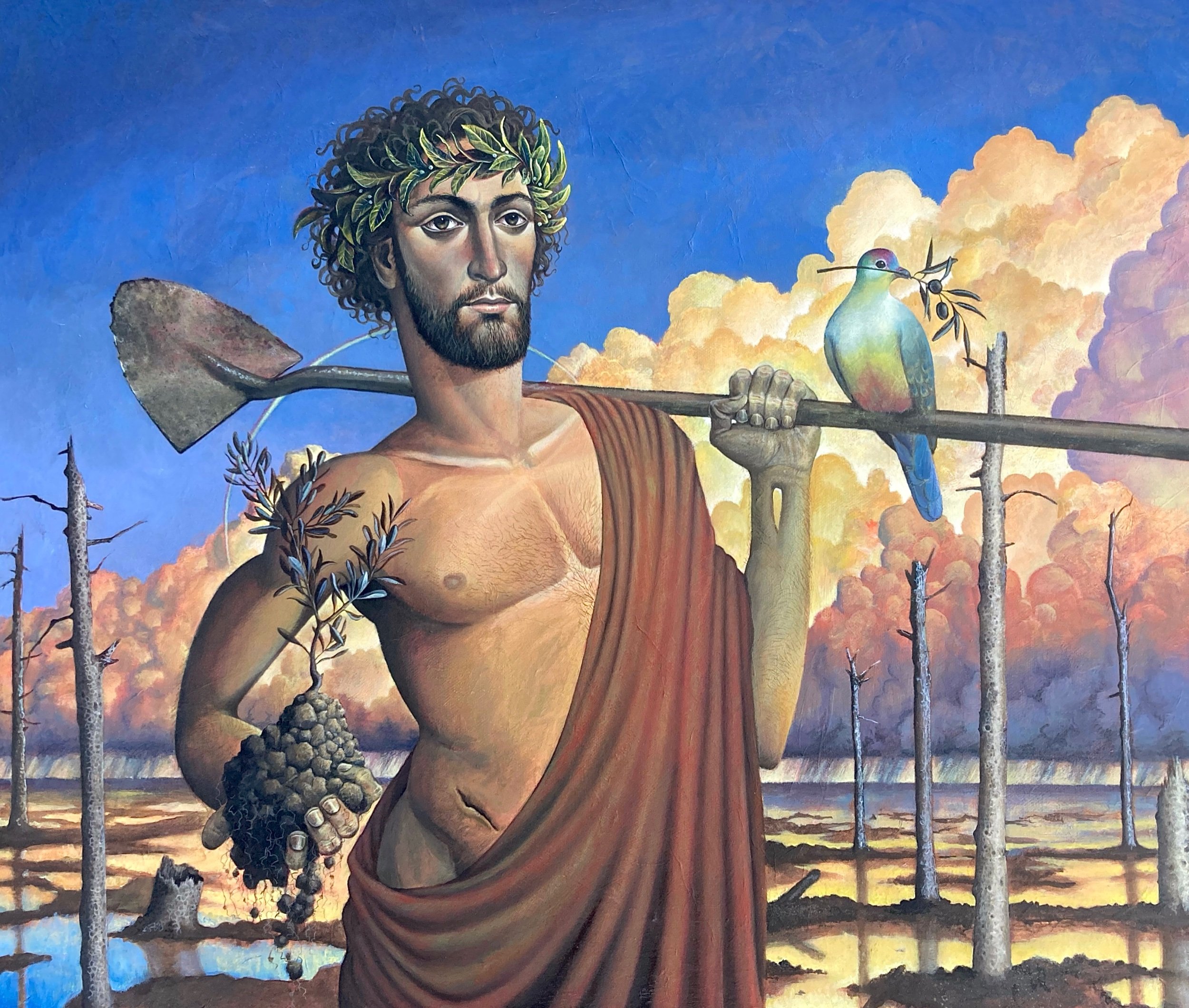
20 x 24, oil on canvas

20 x 24, Oil on canvas

“David and Jonathan” – Acrylic and Oil Painting by J. Richard Briggs
Mythical Realism | Biblical Narrative Art | Sacred Friendship and Grief
“David and Jonathan” by J. Richard Briggs is a deeply moving acrylic and oil painting that reimagines one of Scripture’s most intimate and tragic relationships. Drawing from the biblical account in 1 Samuel, this piece captures David cradling the lifeless body of Jonathan, pierced by an arrow, against the backdrop of a burning forest—a world unraveling in grief, love, and divine heartbreak.
Executed in Briggs’ signature Mythical Realism, the painting merges iconographic formality with emotional rawness, portraying David not as warrior or king, but as a broken-hearted mourner, his face lifted in anguish as fire consumes the trees behind him. Jonathan’s lifeless body is rendered in dark armor, arms limp, blood flowing—held with reverence by the man who once called him “more wonderful to me than the love of women.”
The figures are wrapped in flowing, patterned textiles reminiscent of sacred vestments, suggesting a kind of liturgy of loss. The cracked, vein-like textures across the surface resemble ancient frescoes, adding a layer of timelessness to the scene. The interplay of oil and acrylic enhances the tension between warmth and coolness, solidity and fragility, fire and stillness.
Briggs offers not just a biblical depiction but a visual meditation on grief, covenantal love, and the devastation of war. This is sacred lamentation—an image that invites viewers to dwell in the mystery of divine love expressed through human vulnerability, loyalty, and loss.
Ideal for collectors of contemporary biblical art, spiritually evocative figurative painting, or those drawn to narratives of friendship, devotion, and holy grief, David and Jonathan is a haunting and beautiful tribute to a bond forged in love and fractured by death.

36 x 48, Acrylic & metal leaf on canvas
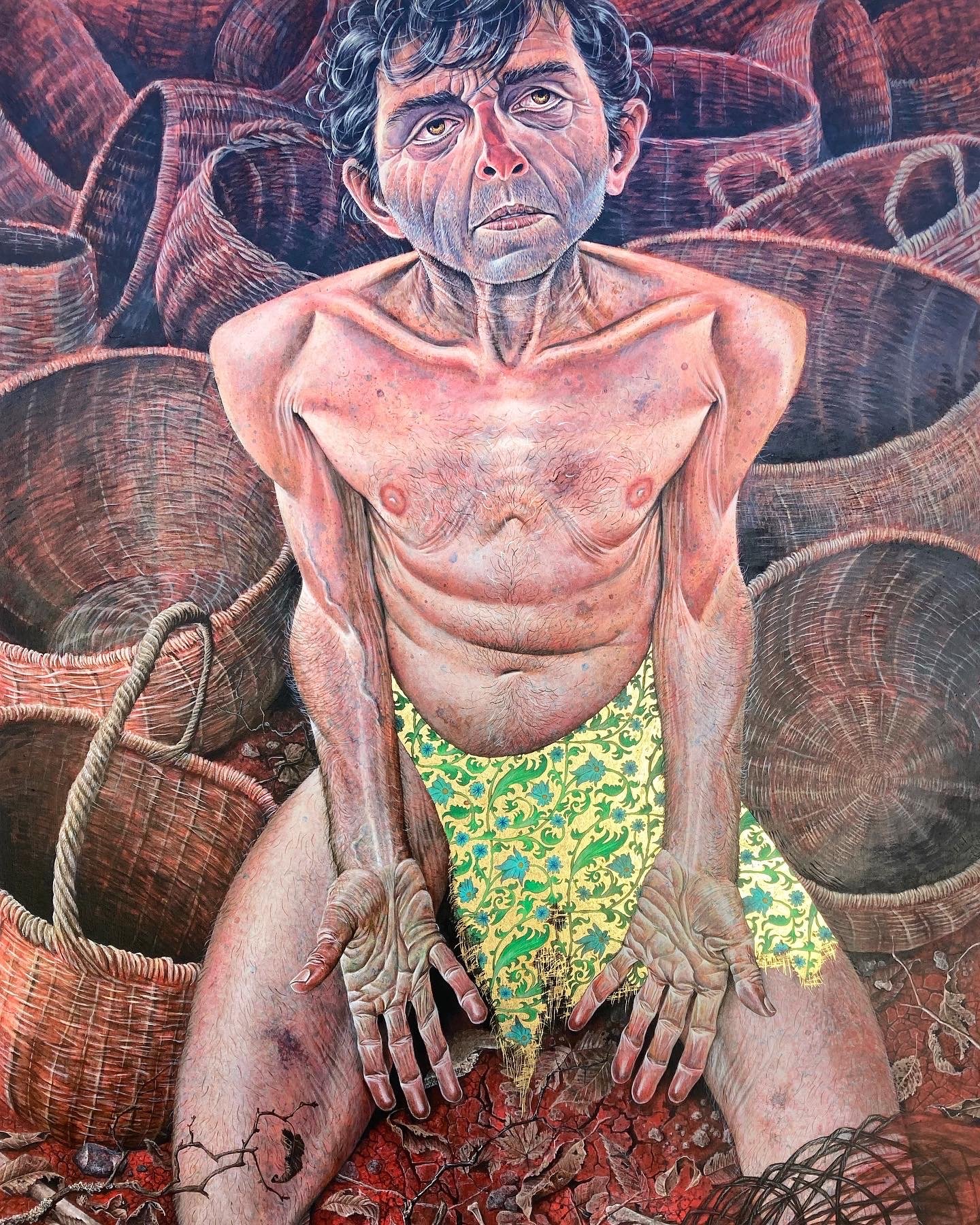
Mythical Realism | Contemporary Religious Art | Lamentation and Human Suffering
“Job” by J. Richard Briggs is a visceral and vulnerable acrylic painting that draws direct inspiration from Karl Zerbe’s mid-century depiction of Job, while reinterpreting the biblical sufferer through Briggs’ own lens of Mythical Realism. Stripped bare, seated among emptied baskets, and clothed only in a tattered cloth of ornate gold patterning, this Job is not a distant symbol—but a man with cracked hands, weathered skin, and eyes that have seen too much.
He sits hunched on scorched earth, surrounded by vessels of provision that are now empty—symbols of a life once full, now hollowed by loss. His open hands stretch forward in silent protest or unanswered prayer, capturing the raw ache of suffering without explanation, and the spiritual disorientation of divine silence.
Briggs’ use of acrylic brings an intense richness to the flesh tones, textures, and decaying beauty of the scene. The contrast between the lush, regal textile and the bruised, broken body beneath it underscores Job’s dignity even in desolation—a man crowned with sorrow, still upright in his ruin.
This painting is a meditation on lament, embodiment, and the endurance of faith in the absence of resolution. Echoing Zerbe’s emotional intensity but layered with Briggs’ own symbolic vocabulary, Job becomes a universal figure: wounded, bewildered, still asking to be seen.
Ideal for collectors of contemporary biblical art, existential religious painting, or those drawn to theology through human form, this piece invites viewers to sit in the ash heap and feel the gravity of unanswered suffering, sacred dignity, and the slow burn of hope.
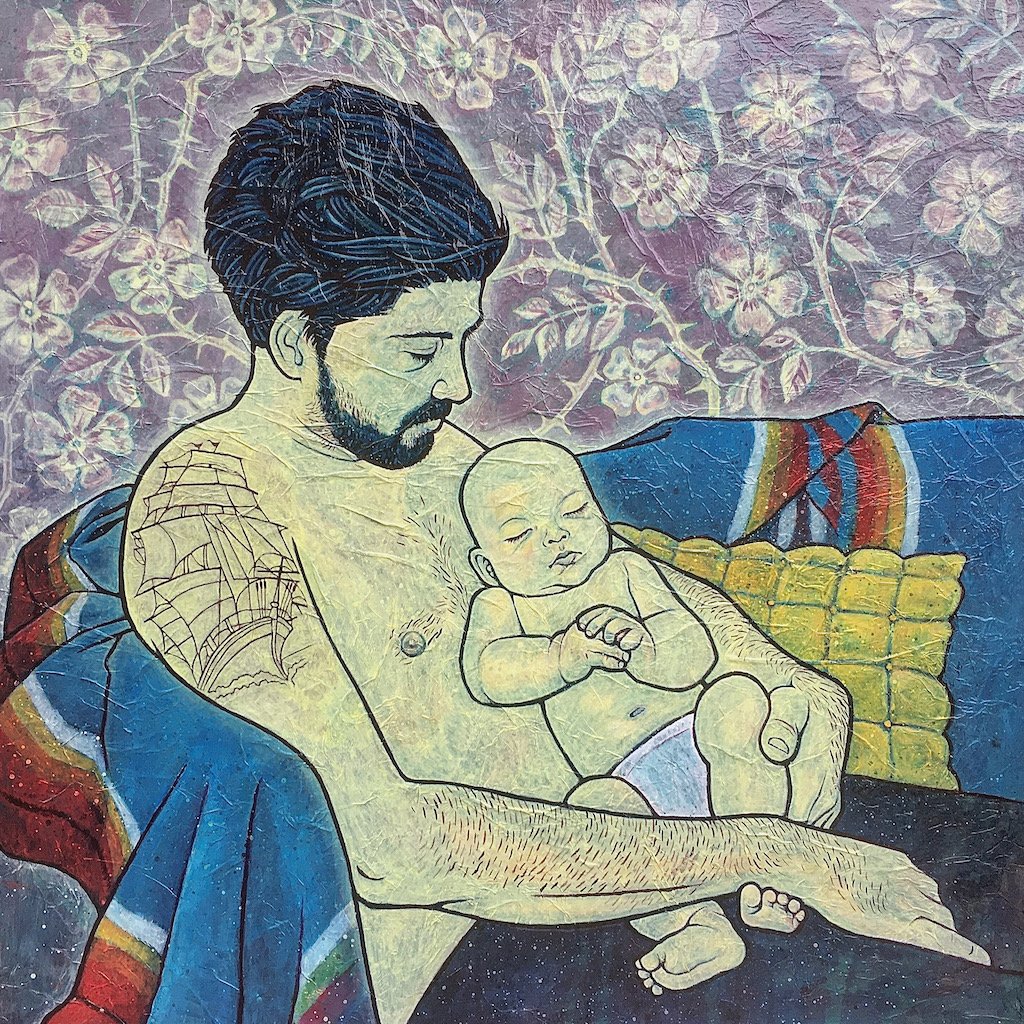
“Madonna and Child (Reimagined)” by J. Richard Briggs is a gentle, luminous acrylic painting that reinterprets the ancient iconography of Mary and the infant Christ through the image of a modern father and his sleeping child. Infused with quiet reverence and vulnerability, the work offers a fresh vision of masculinity as nurturing, tender, and present—a sacred act of holding.
Wrapped in a striped wool blanket, the tattooed father cradles his baby with soft, protective arms. His gaze is downward, absorbed in the miracle of proximity, his body curved around the child like a halo of warmth. Behind them, a field of pale florals emerges across a textured lavender backdrop, echoing the visual tradition of sacred portraiture and drawing on Briggs’ signature Mythical Realism—where domestic moments are transfigured into spiritual events.
The intimacy of the scene reclaims and re-centers fatherhood as a holy vocation, suggesting that tenderness, quiet strength, and care are not counterpoints to masculinity—but essential to it. It is an image that holds both contemporary resonance and ancient symbolism, reminding viewers that the sacred doesn’t always arrive in cathedrals—it arrives in couches, cradles, and everyday acts of love.
Ideal for collectors of modern sacred art, symbolic portraiture, and art exploring masculinity and devotion, this piece speaks to a longing for reconciliation between strength and softness, power and gentleness—offering a hopeful reimagination of what it means to bear love in flesh.
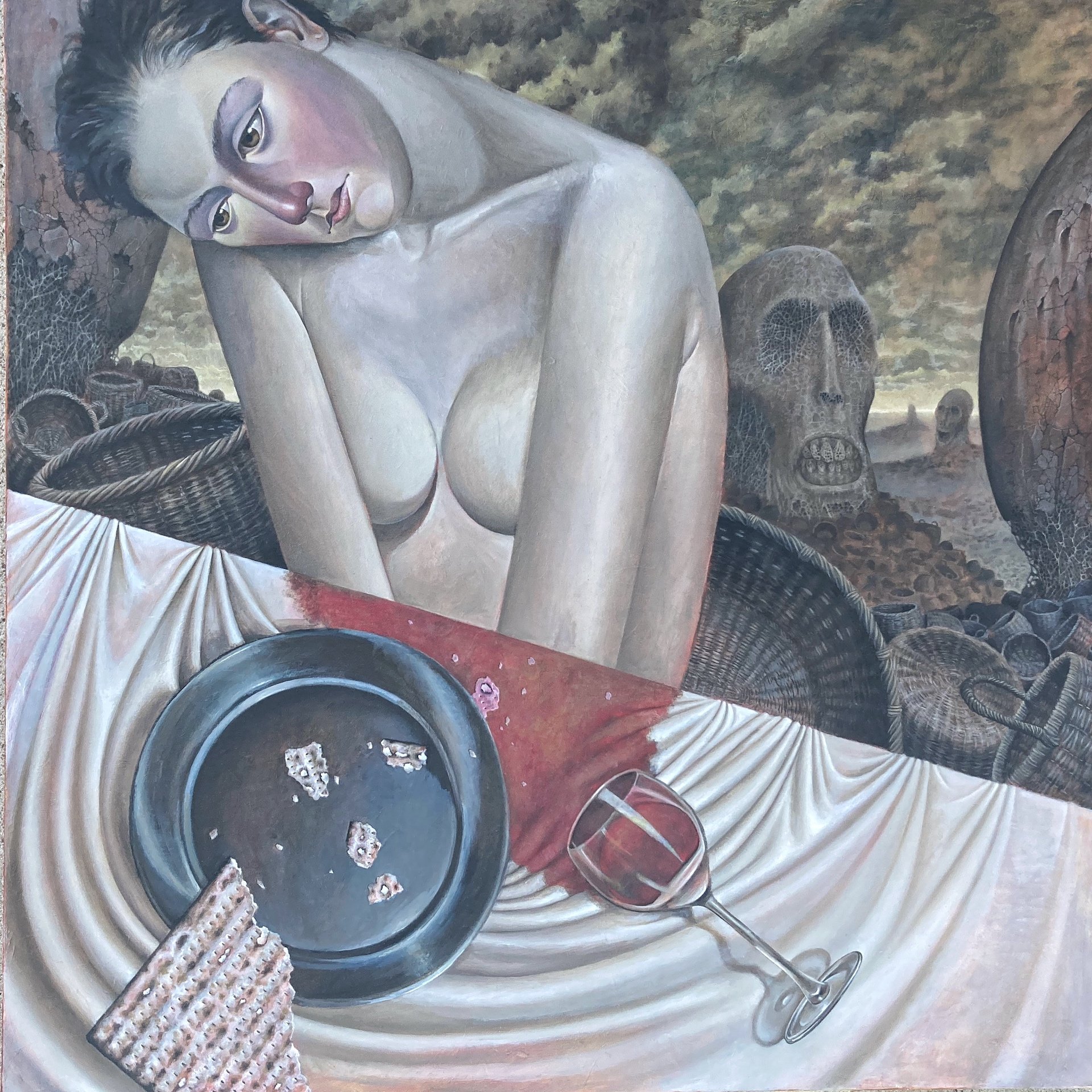
Mythical Realism | Contemporary Religious Art | Eucharist, Lament, and Sacred Defiance
“In the Presence of My Enemies” by J. Richard Briggs is a stark and emotionally arresting oil painting that reinterprets the familiar words of Psalm 23 through a lens of surreal lament and sacred vulnerability. Set against an apocalyptic landscape littered with baskets, broken earth, and skeletal figures, a solitary, bare-breasted woman leans with quiet defiance over a table of bread, wine, and blood—a visual evocation of Eucharist, grief, and unflinching witness.
Her gaze is distant yet unwavering, tilted slightly as if bearing a weight unseen. The table before her is dressed in draped white linen and stained crimson—suggesting both ritual and violence, feast and sacrifice. A half-spilled glass of wine, a blackened dish with broken matzah, and the eerie presence of skull-like watchers in the background evoke a chilling reversal of sacred hospitality. This is not a safe table, but a table kept despite threat—a meditation on what it means to be nourished in the presence of fear, oppression, and death.
Briggs’ Mythical Realism and precise oil technique give the painting a timeless, icon-like stillness, while its subject matter burns with contemporary urgency. It invites reflection on bodily exposure, spiritual endurance, and the tension between intimacy and dread, layered with theological and liturgical echoes. It’s a table of remembrance, but also one of resistance.
Ideal for collectors of symbolic contemporary Christian art, surreal religious narratives, or those drawn to works engaging with suffering, ritual, and sacred resilience, In the Presence of My Enemies offers both a personal lament and a visual psalm of survival.
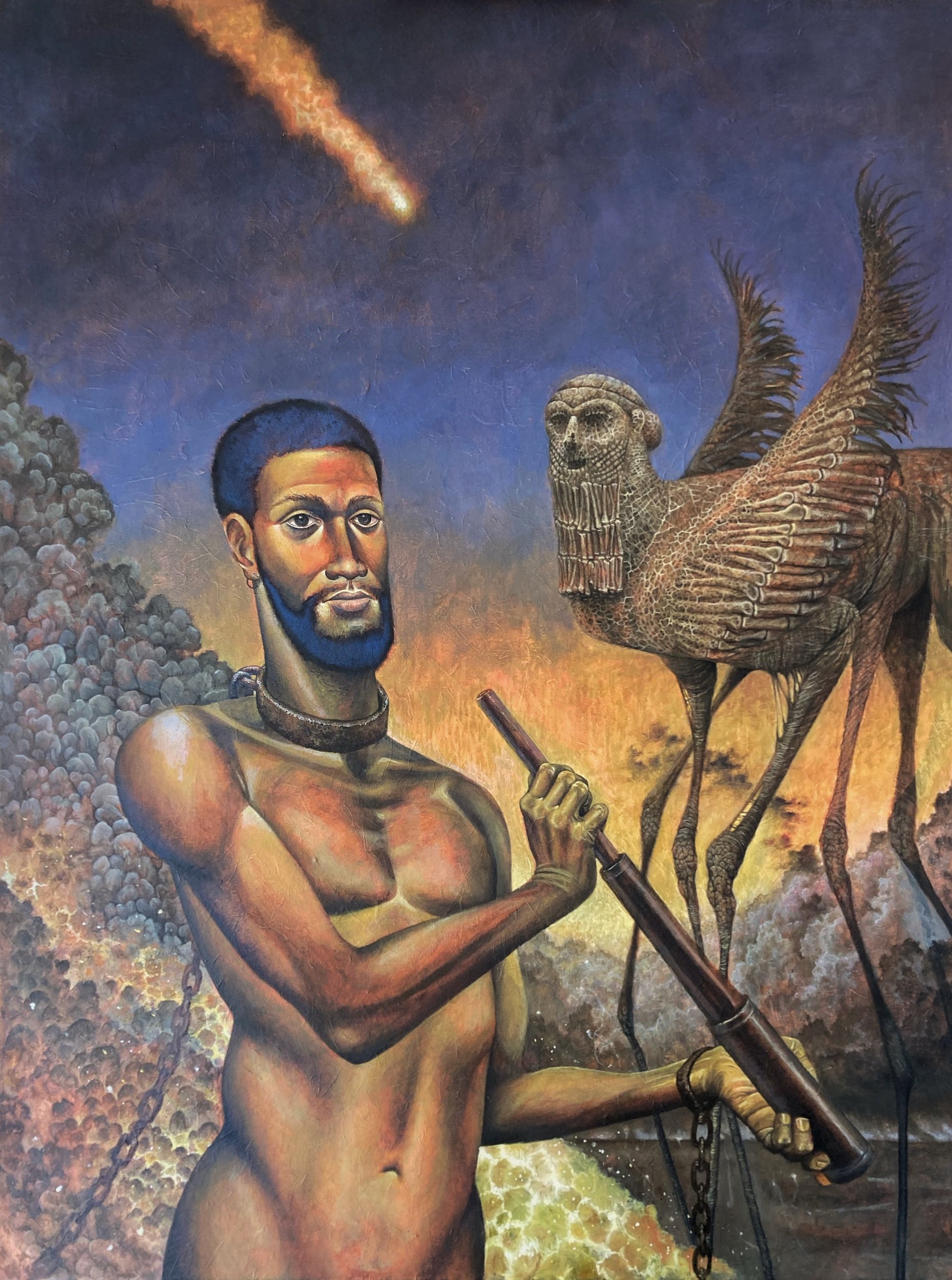
Mythical Realism | Contemporary Prophetic Art | Apocalyptic Imagery and Sacred Resistance
“Daniel, The Prophet” by J. Richard Briggs is a powerful and visually arresting oil painting that reimagines the biblical figure of Daniel not as a passive dream interpreter, but as a bold seer standing at the crossroads of empire, resistance, and revelation. Rendered in Briggs’ distinctive Mythical Realism, this work fuses ancient apocalyptic iconography with a modern sense of spiritual urgency and liberation.
Daniel appears nearly nude, bearing the marks of enslavement—chained, collared, and scarred, yet holding a telescope in one hand, a tool of both vision and hope. His gaze is forward, unflinching, defiant—not merely enduring exile, but reading the signs in the heavens. Behind him rises a winged, lion-bodied creature with the face of a man: a direct allusion to the visionary beasts of Daniel 7, symbols of empire, chaos, and cosmic power. Smoke and flame swirl beneath their feet, while a meteor descends through the night sky—portent, judgment, or promise, depending on the viewer’s posture.
Briggs paints this prophetic figure not in soft pastels or quiet contemplation, but with rich, burning hues and muscular conviction. This Daniel is not trapped in the past—he speaks to the present moment: to systems of oppression, to spiritual exile, to the longing for justice and apocalyptic unveiling.
This painting is a meditation on spiritual resistance, divine vision, and the role of the prophet as both seer and survivor. Through oil paint’s depth and texture, Briggs invites viewers into a sacred narrative that transcends time—where ancient prophecy becomes a mirror for our own fractured world.
Ideal for collectors of biblical visionary art, symbolic resistance imagery, and those drawn to works exploring justice, empire, and sacred truth, Daniel, The Prophet offers a haunting and hope-laced image of a man standing in fire and still looking to the stars.

Surreal Still Life | Symbolic Narrative Art | Love, Loss, and the Unseen Horizon
“Still Life in San Diego” by J. Richard Briggs is a deeply personal acrylic painting that reimagines the still life genre as a vessel of symbolic grief and fragile, unspoken hope. Painted in the wake of a romantic loss and a move away from San Diego, the work gathers fragments of memory, myth, and emotional residue into a surreal domestic altar—each object carefully chosen, each detail loaded with quiet ache.
At its center sits a Greek amphora, painted with the tragic intimacy of Achilles and Patroclus—a mythic love story etched into the surface of the vessel like a wound that refuses to fade. Nearby, a telescope rests on the table, pointed outward—not inward in reflection, but toward some unknown horizon the viewer cannot see. It becomes a symbol of longing, of unanswered questions, and of hope reaching beyond the ruins.
A turtle shell, cracked and empty, and a toppled clay pot lie beside it. The scene is surrounded by empty baskets, a symbolic echo of Briggs’ earlier Job painting, where baskets represented provision and fullness—now emptied by suffering. A toy dinosaur rests on the table’s edge like a forgotten remnant of childhood or a small nod to the absurd. Through the warped windowpane, the San Diego sky burns with surreal cloud forms and fading light, both beautiful and unsettling.
The title, Still Life in San Diego, offers a double entendre—evoking both the tradition of still life and the suspended life of a soul stilled by grief and relocation. And yet, within the sorrow, there is a whisper of insistence—the telescope doesn’t face the past, but out toward whatever comes next.
Painted in Briggs’ meticulous Mythical Realism, this work is ideal for collectors of symbolic surrealism, narrative-rich still life, and art that explores grief, memory, and spiritual persistence. It is a quiet, reverent witness to the ache of loss—and the small, stubborn reaching toward whatever healing might lie just beyond the frame.